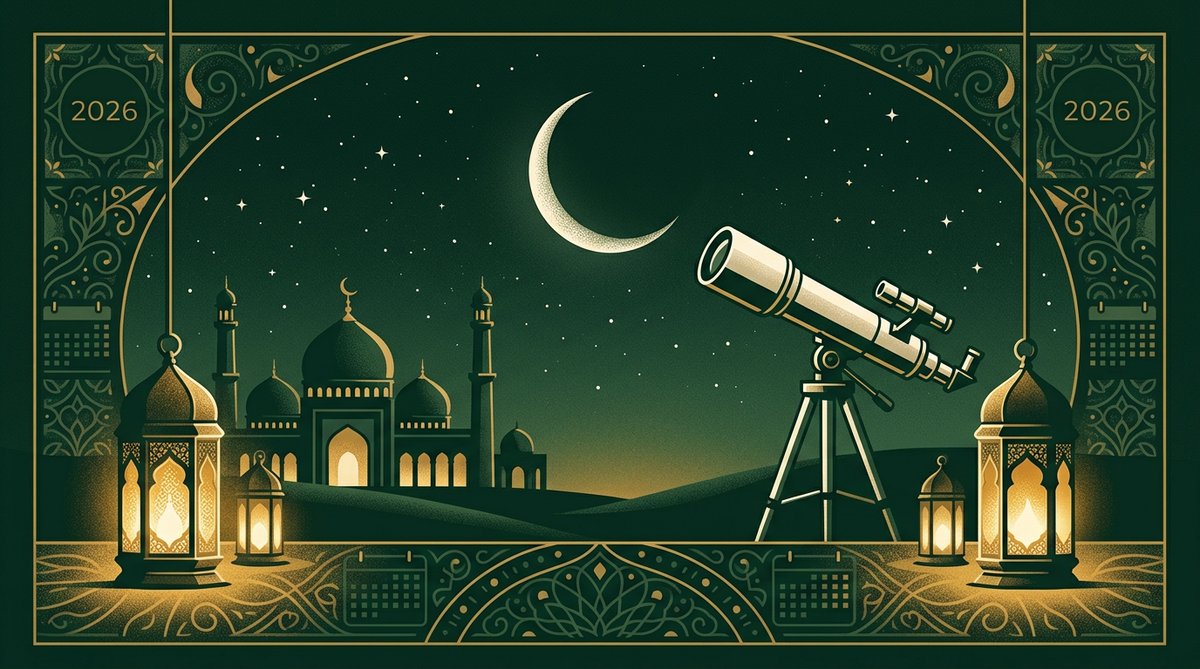
Aïd el Fitr 2026: Unraveling the Lunar Calendar and Date Variations
As the holy month of Ramadan draws to a close, Muslims worldwide eagerly anticipate the joyous celebration of Aïd el Fitr 2026. This significant festival, marking the end of fasting, is a time for communal prayers, family gatherings, feasting, and charity. However, for many, a recurring question emerges: why do the dates for Aïd el Fitr sometimes vary by a day between different regions or communities? For 2026, the discussion revolves around March 20th and March 21st, reflecting a fascinating interplay of astronomical science, religious tradition, and geographical reality.
Understanding these subtle shifts requires delving into the Islamic lunar calendar, which relies on the sighting of the new crescent moon (hilal) to mark the beginning of each month. This principle, while seemingly straightforward, gives rise to diverse interpretations and methodologies that directly influence when Aïd el Fitr 2026 will be observed across the globe.
The Astronomical Compass: Why France Leans on Calculations for Aïd el Fitr 2026
In many Western nations, particularly in France, religious bodies like the Conseil Théologique Musulman de France (CTMF) adopt a more scientifically grounded approach to determine Islamic dates. For Aïd el Fitr 2026, the CTMF has already announced its findings based on rigorous astronomical calculations, aiming to provide clarity and unity for the Muslim community within France. Their methodology hinges on predicting the precise moment of the lunar conjunction and the subsequent theoretical visibility of the crescent moon.
According to the CTMF's detailed scientific communiqué, the lunar conjunction – the precise moment when the moon, earth, and sun align, marking the astronomical "new moon" – is anticipated on Thursday, March 19, 2026, at 01:24 GMT (02:24 AM in Paris). Following this conjunction, the theoretical visibility of the first crescent of Shawwal (the month immediately after Ramadan) could occur on the same day, from 15:24 GMT (16:24 PM French time). These specific astronomical parameters lead the CTMF to confidently declare Friday, March 20, 2026, as the official date for Aïd el Fitr 2026 in France. This commitment to pre-calculated dates offers a predictable calendar for millions of Muslims, allowing for meticulous planning and coordination of festive prayers and events. For more detailed information on France's specific announcement, you can read Aïd el Fitr 2026: CTMF Confirms March 20 for France.
Global Perspectives: Navigating the Lunar Crescent for Aïd el Fitr 2026 Across Nations
While some regions, like France, prioritize astronomical calculations, a significant portion of the Muslim world still adheres to the traditional method of actual moon sighting. This reliance on visual confirmation, often involving local religious committees and observatories, is the primary reason behind the potential one-day discrepancy for Aïd el Fitr 2026. The timing of the moon sighting itself is influenced by several critical factors:
- Varying Start Dates of Ramadan: Not all countries begin Ramadan on the same day. If a country started Ramadan on February 18th, they would be observing the 29th or 30th day earlier than a country that started Ramadan on February 19th. This initial difference directly impacts when they would look for the Shawwal crescent.
- Geographical Location and Horizon: The visibility of the crescent moon is highly dependent on geographical location, local sunset times, and atmospheric conditions. What is visible in one part of the world might be obscured or simply not set yet in another. For instance, according to international astronomical centers, some countries attempting to sight the crescent on Wednesday, March 18th, 2026, would find it impossible due to the moon setting before the sun and the conjunction occurring later. These nations would complete 30 days of Ramadan, inevitably fixing their Aïd el Fitr 2026 for Friday, March 20th.
- Actual Visibility vs. Theoretical Visibility: Even when the new moon has astronomically occurred, its thin crescent might not be visible to the naked eye immediately after sunset, especially in regions with cloudy skies or specific atmospheric conditions. For countries observing on Thursday, March 19th, while many are expected to announce Aïd on Friday, March 20th, there's a strong possibility that some regions might not achieve actual visual confirmation of the crescent. In such cases, these communities would complete 30 days of Ramadan, pushing their Aïd el Fitr 2026 celebration to Saturday, March 21st. This highlights the delicate balance between scientific prediction and the age-old religious injunction of direct observation.
Understanding the "Nuit du Doute" and Local Confirmations
The concept of the "Nuit du Doute" or the "Night of Doubt" is central to the traditional moon-sighting methodology. Typically held on the 29th day of Ramadan, this is when religious councils, such as those associated with the Grande Mosquée de Paris (Grand Mosque of Paris) or similar bodies in other countries, convene to collectively sight the new moon or receive authenticated testimonies of sightings from reliable witnesses. If the crescent is sighted, Ramadan ends, and Aïd is declared for the following day. If not, Ramadan is automatically extended to 30 days.
This approach, while deeply rooted in Islamic tradition, inherently introduces the possibility of date variations. Different committees, even within the same country, might arrive at different conclusions based on their local sightings or interpretations of reports. For Aïd el Fitr 2026, while the CTMF has provided a calculated date for France, other religious institutions might await the actual "Nuit du Doute" before making their final pronouncements, contributing to the nuanced landscape of dates. It underscores the autonomy and varied interpretations within the global Muslim community, even as they all strive to fulfill the same religious obligations.
Celebrating Aïd el Fitr 2026: More Than Just a Date
Irrespective of whether Aïd el Fitr 2026 falls on March 20th or March 21st for an individual, the spirit of the celebration remains universally vibrant and profound. It marks a momentous occasion of gratitude, forgiveness, and renewal after a month of spiritual discipline. The day typically begins with special congregational prayers, held in mosques or large open spaces, where Muslims come together to offer thanks to Allah.
A crucial aspect preceding these prayers is the fulfillment of Zakat el Fitr. This obligatory charity is designed to purify the fasting person from any minor sins or idle talk during Ramadan and, more importantly, to ensure that the less fortunate can also partake in the joy and bounty of Aïd. For 2026, the recommended amount for Zakat el Fitr in France has been set at 9 euros per person. It is essential for every eligible Muslim to pay this charity before the Aïd prayer, ensuring its timely distribution to those in need. Families then gather for festive meals, exchange gifts, visit relatives, and engage in acts of kindness and community building.
Practical tips for celebrating Aïd el Fitr 2026:
- Confirm Local Dates: Always verify the final confirmed date for Aïd with your local mosque or religious authority.
- Pay Zakat el Fitr Promptly: Ensure your Zakat is paid before the Aïd prayer to maximize its benefit for the recipients.
- Plan Ahead: Book travel, coordinate family gatherings, and prepare meals in advance, especially if your region confirms the date closer to the time.
- Embrace the Spirit: Focus on the spiritual essence of the day – gratitude, forgiveness, charity, and strengthening communal bonds.
Further details on Zakat and its specifics for the French community can be found in Aïd el Fitr 2026 France: Date Confirmed & Zakat Details.
Conclusion
The anticipation for Aïd el Fitr 2026 brings with it a fascinating discussion on lunar calendars, astronomical science, and deeply held religious traditions. Whether your community observes the end of Ramadan on March 20th or March 21st, the underlying message of Aïd remains steadfast: a celebration of perseverance, community, compassion, and renewed faith. As Muslims around the world prepare to welcome Shawwal, the slight variation in dates serves as a poignant reminder of the rich diversity within Islam, united by a common spiritual purpose and the universal joy of breaking fast.